
Welcome to the start of your changemaker journey!
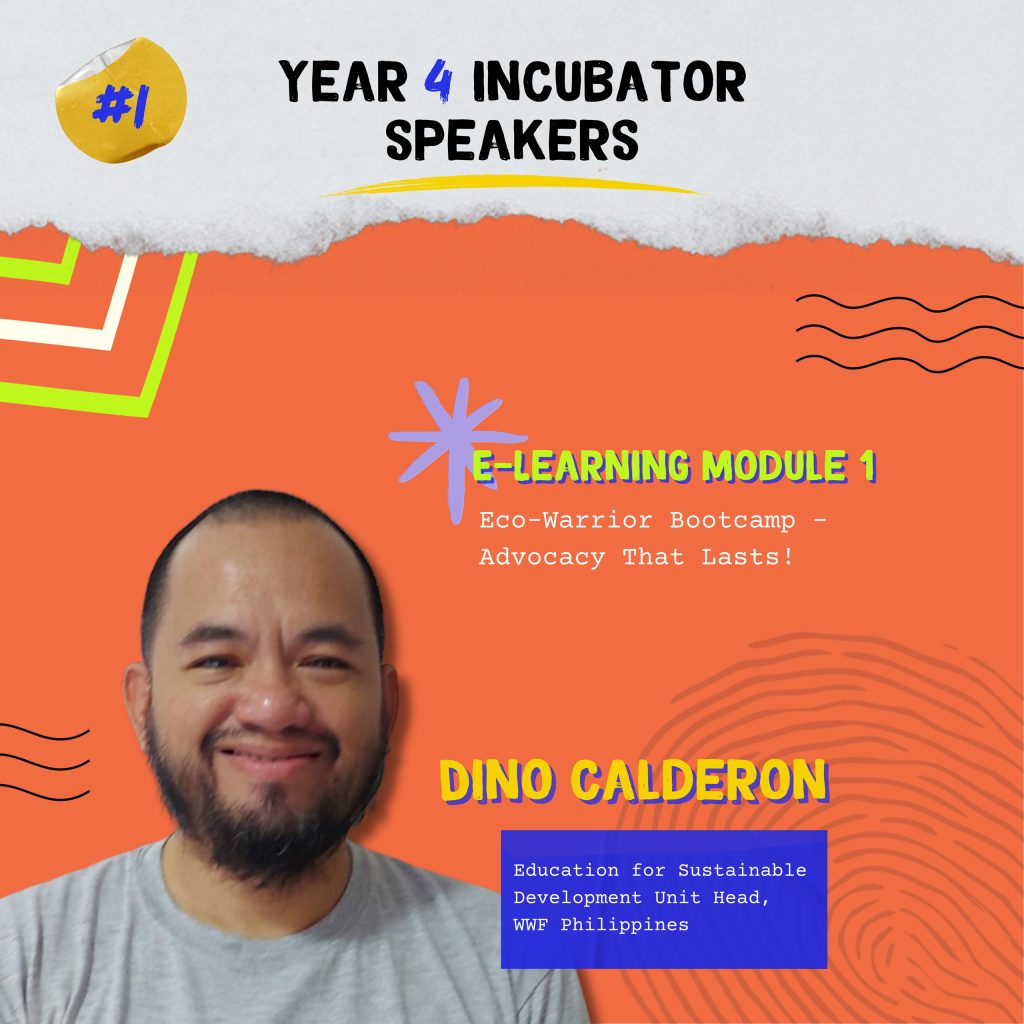
To guide you through this foundational module, we’re joined by Dino Calderon, a passionate environmental educator and the Head of the Education for Sustainable Development (ESD) Unit at WWF-Philippines.
Dino has been part of WWF’s mission since 2003, starting as a volunteer and later developing climate and conservation programs for students and communities across the country. Today, his work has reached over one million people, from young learners to local leaders, empowering them to understand biodiversity, climate change, and the role we each play in protecting the planet.
Get ready to reflect, reconnect, and take your first steps as an eco-advocate.
Module Description:
This first module sets the foundation for your journey as a changemaker by starting with the self. You’ll explore what it means to be an environmental steward and reflect on your personal role in shaping the future through your actions.
Led by WWF educator Dino Calderon, the session introduces a simplified Theory of Change model to help you map out the change you want to see and your unique role in driving it. You’ll also be introduced to design thinking tools, helping you transform environmental issues into meaningful, actionable solutions.
Learning Objectives:
By the end of this module, you will:
- Understand the core principles of sustainability and ESD (Education for Sustainable Development).
- Reflect on your personal connection to environmental stewardship.
- Explore the dimensions of environmental education: Head (knowledge), Heart (connection), and Hands (action).
- Apply design thinking frameworks to guide campaign ideation and development.
- Begin shaping your sustainability campaign based on empathy and real-world insights.
Key Takeaways:
- Sustainability means balancing people, planet, and prosperity – it’s not just an environmental issue.
- Lasting advocacy begins with empathy: understanding your audience deeply and tailoring your approach.
- The Theory of Change helps connect your actions to the long-term outcomes you want to achieve.
- Design thinking is not linear, you’ll cycle through stages like Empathize, Define, Ideate, Prototype, Test, and Implement as you refine your ideas.
- Great campaigns combine personal conviction, local relevance, and collaborative innovation.