


Skip to content
  • Home
  • Our Work
    • Our Work
    • Climate
      • Net Zero Carbon
      • Sustainable Finance
    • Sustainability & Circular Economy
      • Sustainable Palm Oil
      • Circular Economy
    • Nature & Biodiversity
      • Illegal Wildlife Trade
      • Marine Conservation
      • Forest Landscape Restoration
    • Closer to Home
      • Future Sustainability Leaders
      • Green Cities
  • About Us
    • About us
    • Chairman & CEO Message
    • Board of Directors
    • Senior Management
    • Whistleblowing Policy
    • Personal Data Protection Policy
    • Work With Us
    • Volunteering
  • Resources
    • Resources
    • Annual Reports
    • News, Reports & Events
  • Partnerships
    • Partnerships
    • Corporate Partnerships
    • Government Partnerships
    • Philanthropy
  • Policies
    • Policies
    • WWF Network Terms And Conditions
    • WWF Non-Network Terms and Conditions
    • WWF Fraud and Corruption Prevention and Investigation Policy
    • WWFS Commitment to Integrity and Good Conduct Policy
    • WWF Environmental and Social Safeguards Framework (ESSF)
    • WWF-Singapore Procurement Terms And Conditions
    • WWF-Singapore Personal Data Protection Policy
    • WWF-Singapore Whistleblowing Policy
  • Home
  • Our Work
    • Our Work
    • Climate
      • Net Zero Carbon
      • Sustainable Finance
    • Sustainability & Circular Economy
      • Sustainable Palm Oil
      • Circular Economy
    • Nature & Biodiversity
      • Illegal Wildlife Trade
      • Marine Conservation
      • Forest Landscape Restoration
    • Closer to Home
      • Future Sustainability Leaders
      • Green Cities
  • About Us
    • About us
    • Chairman & CEO Message
    • Board of Directors
    • Senior Management
    • Whistleblowing Policy
    • Personal Data Protection Policy
    • Work With Us
    • Volunteering
  • Resources
    • Resources
    • Annual Reports
    • News, Reports & Events
  • Partnerships
    • Partnerships
    • Corporate Partnerships
    • Government Partnerships
    • Philanthropy
  • Policies
    • Policies
    • WWF Network Terms And Conditions
    • WWF Non-Network Terms and Conditions
    • WWF Fraud and Corruption Prevention and Investigation Policy
    • WWFS Commitment to Integrity and Good Conduct Policy
    • WWF Environmental and Social Safeguards Framework (ESSF)
    • WWF-Singapore Procurement Terms And Conditions
    • WWF-Singapore Personal Data Protection Policy
    • WWF-Singapore Whistleblowing Policy
Menu
  • Support WWF
    • Donate
    • Adopt
    • Fundraiser
  • Support WWF
    • Donate
    • Adopt
    • Fundraiser
  • Home
  • Our Work
    • Our Work
    • Climate
      • Net Zero Carbon
      • Sustainable Finance
    • Sustainability & Circular Economy
      • Sustainable Palm Oil
      • Circular Economy
    • Nature & Biodiversity
      • Illegal Wildlife Trade
      • Marine Conservation
      • Forest Landscape Restoration
    • Closer to Home
      • Future Sustainability Leaders
      • Green Cities
  • About Us
    • About us
    • Chairman & CEO Message
    • Board of Directors
    • Senior Management
    • Whistleblowing Policy
    • Personal Data Protection Policy
    • Work With Us
    • Volunteering
  • Resources
    • Resources
    • Annual Reports
    • News, Reports & Events
  • Partnerships
    • Partnerships
    • Corporate Partnerships
    • Government Partnerships
    • Philanthropy
  • Policies
    • Policies
    • WWF Network Terms And Conditions
    • WWF Non-Network Terms and Conditions
    • WWF Fraud and Corruption Prevention and Investigation Policy
    • WWFS Commitment to Integrity and Good Conduct Policy
    • WWF Environmental and Social Safeguards Framework (ESSF)
    • WWF-Singapore Procurement Terms And Conditions
    • WWF-Singapore Personal Data Protection Policy
    • WWF-Singapore Whistleblowing Policy
DONATE
ADOPT
SHOP

Building a future in which people live in harmony with nature

Facebook Instagram Youtube Linkedin Twitter

Home » The Living Planet Report 2014 Reveals Alarming Increase in Human Impact on the Planet.

The Living Planet Report 2014 Reveals Alarming Increase in Human Impact on the Planet.

October 17, 2014

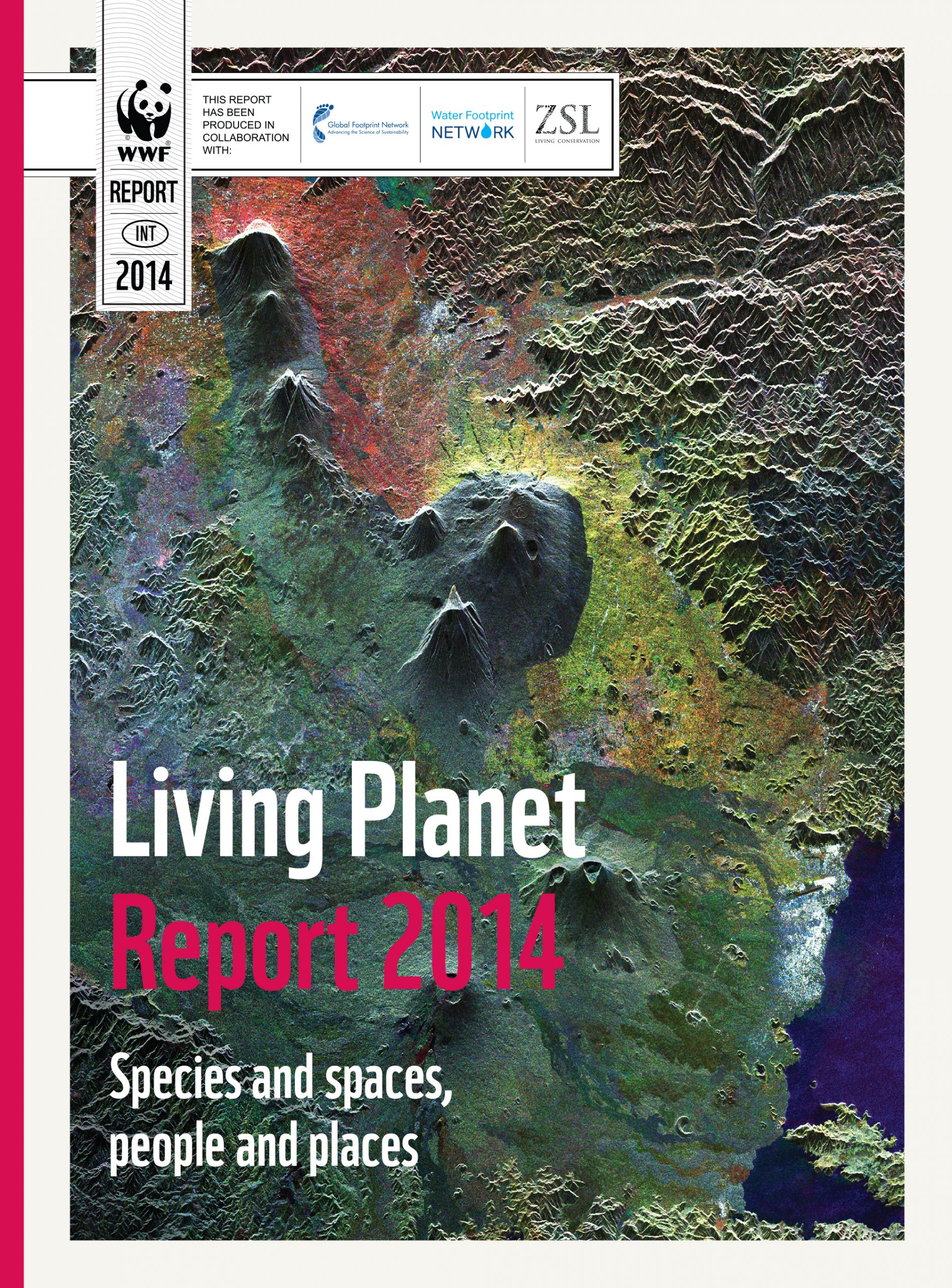
Singapore, 7 October, 2014 – The World Wide Fund for Nature (WWF) has released the 10th edition of the Living Planet Report, which is published every two years outlining the health and state of the planet. The report measured that global wildlife populations have declined by more than half in just 40 years, while Ecological Footprint – a measure of humanity’s demands on nature – continued its upward climb. Put together, biodiversity loss and unsustainable footprint threaten natural systems and human well-being, but can also point us toward actions to reverse current trends. 
  
These startling results have been attributed to habitat loss and degradation, compounded by the added pressure of wildlife hunting to make way for agriculture, urban development and energy production. Climate change is also the next most common threat linked to the decline and possible extinction of some species – glaring evidence that current human action is jeopardising the planet’s future by taking more from the ecosystems and natural processes than can be replenished. 

Singapore is ranked in the top ten of the world’s largest Ecological Footprint, with 70 percent of that coming from 
carbon emissions. Being a small city in terms of land area similar to Hong Kong and Monaco, Singapore uses more resources than what it has available to sustain the increasing demand of human development. This is especially so for a country with limited natural resources, a large amount of goods and services needs to be imported from other countries, contributing to the amount of carbon emissions produced by each individual. If every person in the world lives like someone from Singapore, we will need 4.1 planets to sustain our needs.
  
“The Living Planet Report highlights the fact that we may have already crossed our ‘planetary boundaries’ and it is more urgent than ever for us to act now to change the course and balance development and consumption with 
nature conservation to ensure that our planet can continue to sustain our needs,” said Elaine Tan, CEO, WWF 
Singapore.  
 
“Our societies and economies depend on a healthy planet. We are all connected, every nation, including Singapore, must determine how we can consume less without compromising our development,” added Tan. “We can do this by increasing public awareness on protecting our natural resources, as well as producing and consuming more sustainably.” 
 
WWF Singapore works closely with businesses and government agencies, addressing the issues of climate change, driving market transformation and encouraging partnerships across sectors to come together to impact change to reduce carbon emissions at a sustained level. In 2012, The National Climate Change Strategy document, published by the National Climate Change Secretariat, outlined the impact climate change will have on Singapore, the implications of climate change, as well as initiatives and strategies in place to address these challenges. This includes looking at alternative ways to harness or improve energy efficiency, reducing carbon emissions in all sectors, being ready to adapt to climate change effects, harnessing green growth opportunities and forging partnerships and engaging people.  
 
Raising public awareness is also a strong mandate for WWF Singapore to show individuals that everyone is 
responsible for the health of the planet and that each of us can make a difference. There has also been a noticeable increased participation amongst the people, public, and private sectors in terms of awareness and pledges to protect the environment. In March this year, over 9,000 people gathered together for Earth Hour to show their support and over 30,000 pledges from Singapore were received showing commitment beyond the hour to save the planet.  
 
Sustainable development is possible while maintaining a decent standard of living without the expense of a 
suffering planet. Individuals, communities, businesses, cities and governments have the choice to protect natural 
resources and reducing their Footprint. WWF outlines better choices better choices for managing, using and sharing natural resources within the planet’s limitations with its  “One Planet solutions” that requires us to reserve our natural resources, produce and consume more sustainably, redirect financial flows through resource management and innovation, and lastly, push for equitable resource governance to make fair and ecologically informed choices. 
 
—-ENDS— 

The complete report, summary and support material can be found at 
https://www.wwf.sg/what_we_do/living_planet_report_2014/ 
 
MEDIA CONTACTS: 

     Leanora Lyn Gaffar 
     Assistant Communications Manager 
     World Wide Fund for Nature (WWF) Singapore 
     Email: lgaffar@wwf.sg 
      

PrevBack to Previous Page
NextNext

RELATED PUBLICATIONS

RELATED LINKS

SHARE THIS

RELATED ARTICLES

Loading...
February 3, 2026

Add Your Heading Text Here

WWF-Singapore launches Canopy, a nature finance facility backing 12,000 hectares of high-quality restoration across Southeast Asia 

January 20, 2026

Add Your Heading Text Here

A Tribute from the WWF-Singapore Family

January 15, 2026

Add Your Heading Text Here

Singapore accelerates innovation in nature-based carbon solutions through two new initiatives 

wwf singapore
January 8, 2026

Add Your Heading Text Here

Leadership Update at WWF-Singapore

Facebook Instagram Youtube Linkedin X-twitter

Help us build a future in which people live in harmony with nature

Contact Us

55 Ayer Rajah Crescent #03- 14, Singapore 139949

+65 6730 8100

info@wwf.sg

Our Work
  • Climate
  • Sustainability & Circular Economy
  • Nature & Biodiversity
  • Closer to Home
  • Climate
  • Sustainability & Circular Economy
  • Nature & Biodiversity
  • Closer to Home
About Us
  • About us
  • Chairman & CEO’s Note
  • Board of Directors
  • Senior Management
  • Work With Us
  • Volunteering
  • About us
  • Chairman & CEO’s Note
  • Board of Directors
  • Senior Management
  • Work With Us
  • Volunteering
Resources
  • Annual reports
  • News, Reports & Events
  • Blog
  • Annual reports
  • News, Reports & Events
  • Blog
Partnerships
  • Corporate Partnerships
  • Government Partnerships
  • Philanthropy
  • Corporate Partnerships
  • Government Partnerships
  • Philanthropy
Policies
  • WWF Network Terms And Conditions
  • WWF Non-Network Terms and Conditions
  • WWF Fraud and Corruption Prevention and Investigation Policy
  • WWF Commitment to Integrity and Good Conduct Policy
  • WWF Environmental and Social Safeguards Framework (ESSF)
  • WWF-Singapore Procurement Terms And Conditions
  • WWF-Singapore Personal Data Protection Policy
  • WWF-Singapore Whistleblowing Policy
  • WWF Network Terms And Conditions
  • WWF Non-Network Terms and Conditions
  • WWF Fraud and Corruption Prevention and Investigation Policy
  • WWF Commitment to Integrity and Good Conduct Policy
  • WWF Environmental and Social Safeguards Framework (ESSF)
  • WWF-Singapore Procurement Terms And Conditions
  • WWF-Singapore Personal Data Protection Policy
  • WWF-Singapore Whistleblowing Policy
Support WWF
  • Donate
  • Adopt
  • Fundraiser
  • Donate
  • Adopt
  • Fundraiser

©️ 2022 WWF – World Wide Fund for Nature (Singapore) Limited (UEN 200602275E) |
©️ 1986 Panda Symbol WWF – World Wide Fund For Nature (formerly World Wildlife Fund) | ®️ “WWF” is a WWF Registered Trademark

Eco School Registration

Particulars of Teacher-In-Charge

Preferred days and timings for workshops

(Read more about the workshops on the website)