




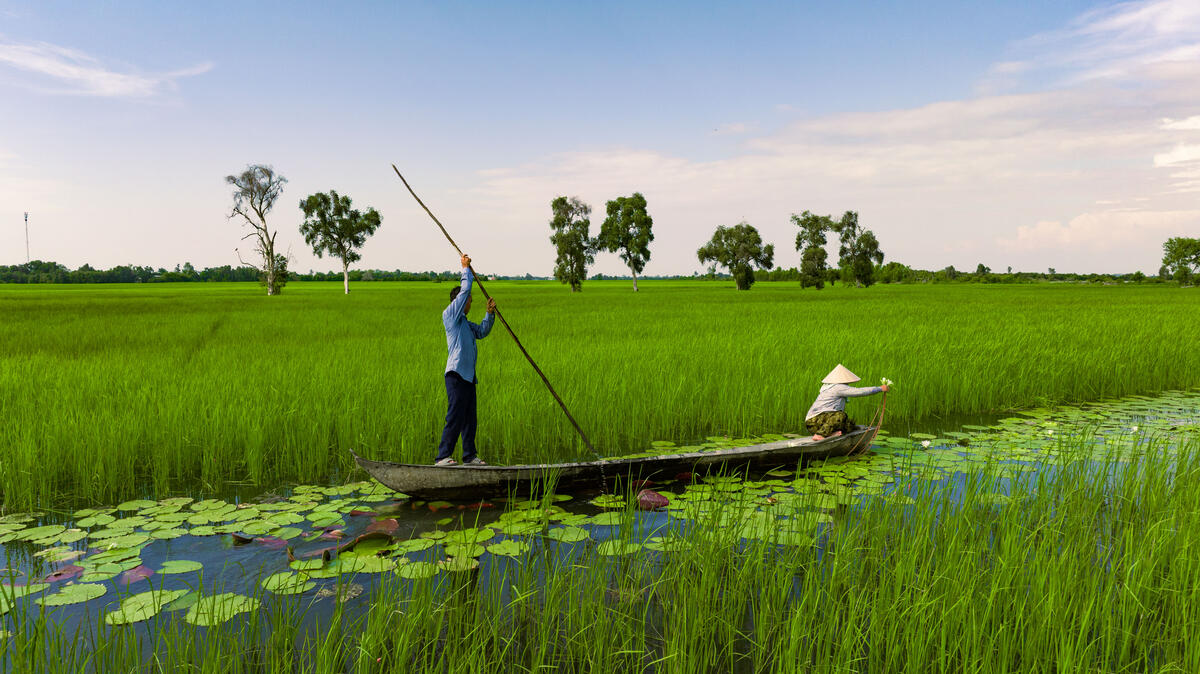
AFRI brings together innovation, science, policy, finance and markets to help farmers adopt climate-resilient agriculture, beginning with rice and expanding to other crops over time.
Singapore, 30 October 2026 – The World Wide Fund for Nature (WWF) Singapore today launched the ASEAN Food Resilience Initiative (AFRI), a regional platform that aims to strengthen food resilience across Southeast Asia, starting in Singapore with a scalable model that can be adapted and implemented in other climate-vulnerable countries.
As a nation that imports more than 90% of its food1, Singapore’s food security is closely tied to the residence of regional and global food supply chains. As climate change drives rising temperatures, floods, droughts, and other extreme weather events that increasingly threaten agricultural production, AFRI will support smallholder farmers in adopting climate-resilient agriculture practices and connect them with rice buyers, strengthening regional food security while creating market incentives for long-term adoption.
Supported by corporates and private foundations, AFRI will initially focus on rice, with plans to expand to other agricultural commodities such as cassava, soya beans and maize. Bringing together partners from government, industry and civil society, including Olam Agri and SATS Ltd, to help steer the initiative, AFRI will harness innovation, science, policy, finance and markets to create the enabling conditions needed to scale climate-resilient agriculture and strengthen food security across Southeast Asia, translating ambition into practical action on the ground.
According to WWF’s Living Planet Report 2026: The Science of Hope, agriculture remains the single largest cause of habitat loss and degradation globally and a leading driver of biodiversity loss. The report also found an average 73% decline in monitored wildlife populations since 1970, highlighting the need to build food systems that are both resilient to climate change and able to support nature’s recovery.
“Farmers cannot be expected to shoulder the cost and risk of transforming our food system alone. If we want agriculture to become more resilient, the companies that buy food, the institutions that finance it, and the governments that shape the market all have a role to play. AFRI brings these stakeholders together to create the conditions needed to make this transition viable for farmers and scalable across the region.
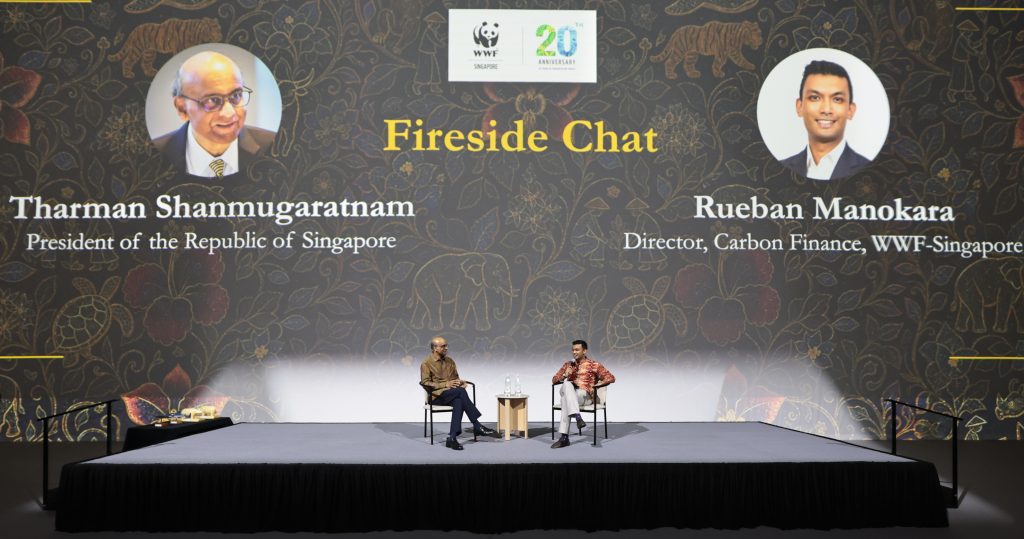
As WWF-Singapore marks its 20th anniversary, AFRI reflects our commitment to working across government, business and communities to help farmers adapt to a changing climate, strengthen food security and protect the natural systems that sustain us.” – Chew Sutat, Chief Executive Officer, WWF-Singapore.
About the ASEAN Food Resilience Initiative (AFRI)
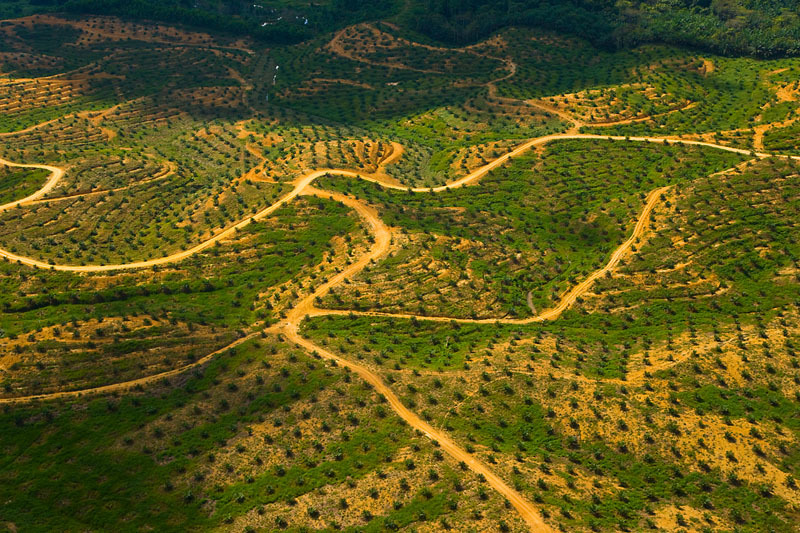
Agriculture is the leading driver of deforestation globally, accounting for more than 80% of forest loss2. At the same time, climate change is affecting crop yields and placing increasing pressure on existing agricultural land. Beginning with rice, AFRI aims to strengthen the resilience of agricultural production by providing greater clarity on farming practices that support adaptation to climate impacts, creating demand for climate-resilient commodities, and supporting farmers in adopting these practices.
- Creating trust and traceability in climate-resilient food production. AFRI will work with TÜV SÜD to develop methodologies and certification pathways to measure and verify climate-resilient rice production. These will draw on the latest science on climate impacts, including the study on the impact of climate change across agriculture in ASEAN member states that was released by the Ministry of Sustainability and the Environment in October 20263.
- Providing market incentives. AFRI will bring together retailers, traders and food manufacturers to help build demand for climate-resilient rice. Through an industry coalition for climate-resilient rice, the initiative aims to improve market access and create stronger incentives for farmers to adopt resilient farming practices.
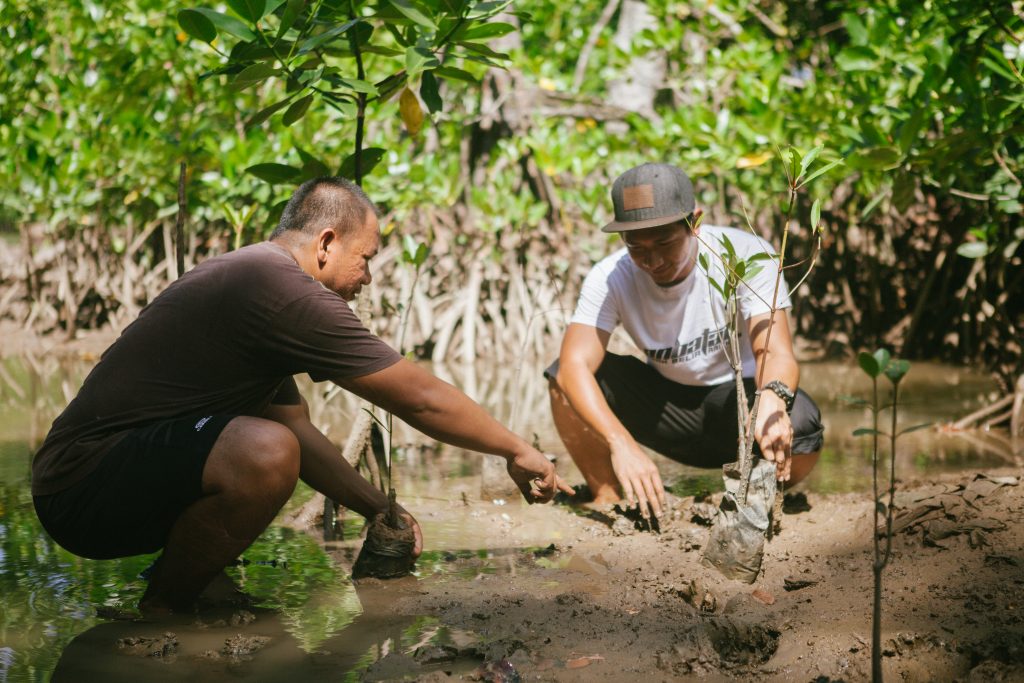
- Supporting farmers to adopt climate-resilient agriculture practices. AFRI will equip rice farmers with knowledge, tools and technologies to adapt to climate change impacts, through training, technical support and on-the-ground capacity building delivered by WWF and its partners.
Together, these efforts aim to strengthen agriculture supply chains and support Singapore’s food security goals. Based in Singapore, AFRI will also contribute to ASEAN’s 2026-2030 sectoral plan to advance regenerative agriculture across Southeast Asia.
For more information on AFRI, please visit: wwf.sg/climate/net-zero-carbon-stage/
Notes to editors
¹ Singapore Food Agency (SFA), Singapore Food Statistics 2025 (Singapore: SFA, 2026), p. 6.
² Food and Agriculture Organization of the United Nations (FAO), FRA 2020 Remote Sensing Survey, FAO Forestry Paper No. 186 (Rome: FAO, 2022), p. 47, Figure 27.
³ Meteorological Service Singapore (MSS), V3 Climate Projections: Singapore’s Third National Climate Change Study (accessed 29 October 2026).
For media enquiries, please contact:
| Izrael Muhamad Tel: +65 9455 7623 Email: aimuhamad@wwf.sg | Jasmine Tan Tel: +65 9181 6265 Email: jasmine@wwf.sg |
About WWF-Singapore
World Wide Fund for Nature (WWF) is one of the world’s leading independent conservation organisations. Our mission is to stop the degradation of the Earth’s natural environment and build a future in which people live in harmony with nature.
WWF works in nearly 100 countries, focusing on key areas including climate change, deforestation, illegal wildlife trade, marine conservation, nature finance, and responsible sourcing and consumption. We advance these efforts by engaging communities, businesses and governments through strategic partnerships, education and outreach to achieve lasting impact.
For more information, visit wwf.sg.